Hybrid Depositions: A Record-Integrity Planning Protocol
Plan hybrid depositions from Rule 29 and 30 authorization through roles, exhibits, access controls, interruptions, and closeout.
Practice Field Guide
A practical protocol for authorization, participants, officer and oath arrangements, recording, exhibits, access, and recovery in hybrid proceedings.
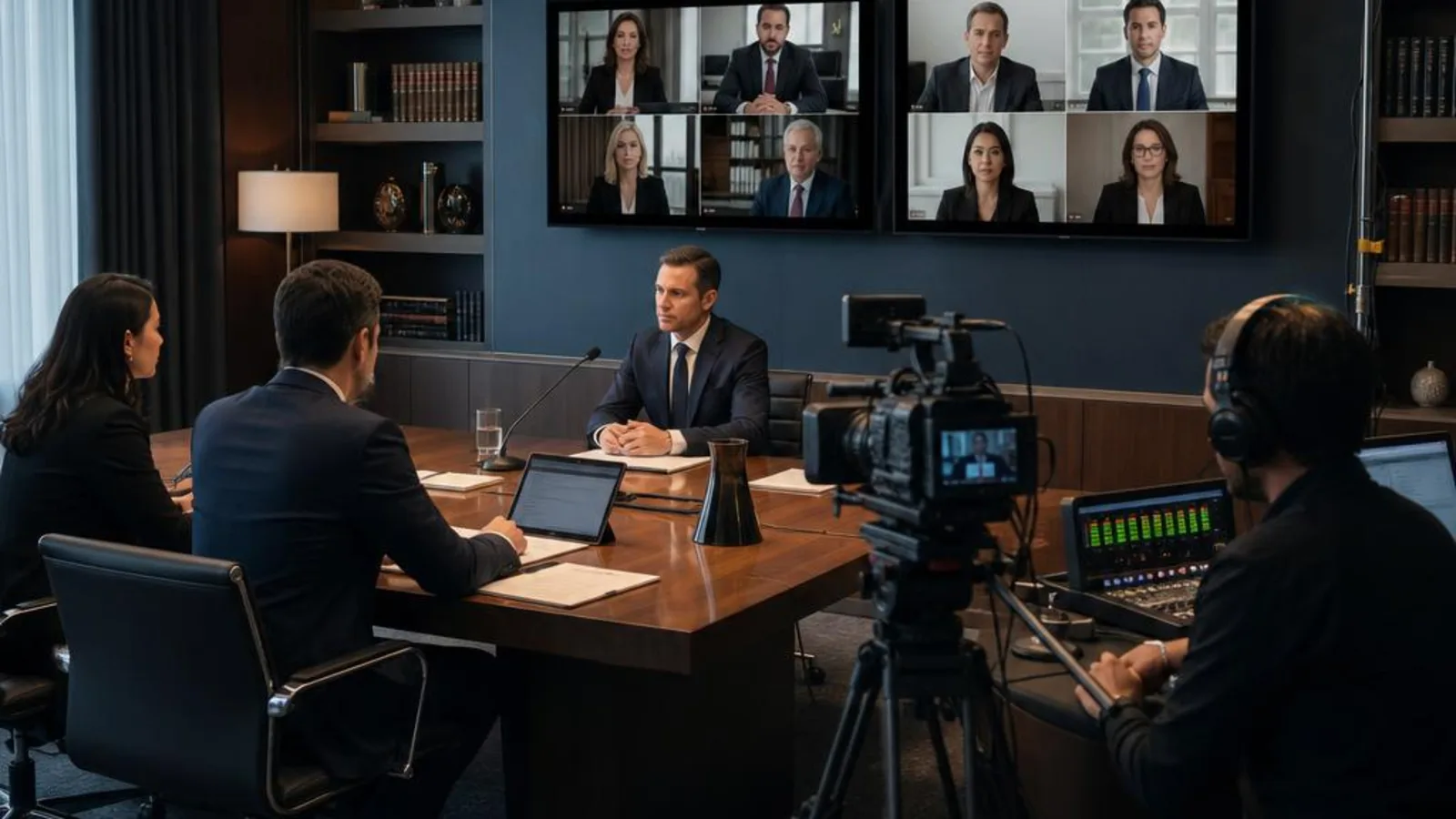
“Hybrid” describes an arrangement, not a single procedure. A witness may be in a conference room with the officer while lawyers join remotely; the witness may be remote while counsel and a videographer share a room; or everyone may be distributed. Those designs create different risks. Start with what the governing rule, order, stipulation, notice, and case-specific needs require the team to prove afterward: authorization for the format, who was present, what was displayed, and where any recording interruption ended and resumed.
This field guide is organized around the questions that should be resolved before the record opens. It uses federal depositions as a reference point because Federal Rules of Civil Procedure 29 and 30 expressly address stipulations and remote means. It is not a substitute for the governing court’s orders, local rules, rules governing remote oaths, interpreter requirements, or the instructions of the officer administering the deposition.
1. Authorization for the format
Start with the rule, then the case order
In a federal civil deposition, Rule 30(b)(4) provides that parties may stipulate—or the court may on motion order—that a deposition be taken by telephone or other remote means. For the listed rule purposes, it is taken where the deponent answers the questions. Rule 29(a) separately permits parties, unless the court orders otherwise, to stipulate that a deposition be taken before any person, at any time or place, on any notice, and in the manner specified, as well as to stipulate about other procedures governing or limiting discovery. Rule 29(b) addresses only a stipulated extension of time and requires court approval if it would interfere with time set for completing discovery, hearing a motion, or trial.
Those provisions are not a universal protocol. A scheduling order, discovery order, judge-specific practice, state rule, or a protective order may supply more exact directions. Confirm whether a written stipulation, a motion, or both are needed; whether the judge has imposed a platform, attendance, exhibit, recording, or confidentiality requirements; and whether the stipulation changes a deadline or a right in a way that needs court approval. Put the operative authority in the case file rather than relying on a calendar invitation.
Make the stipulation operational
A useful stipulation does more than say “remote.” Identify the proceeding, date, participants’ locations where material, platform, method of recording, officer, remote-oath arrangement if applicable, exhibit exchange procedure, who may be physically present with the witness, private communications rule, and reconnection process. Specify whether a remote participant’s inability to connect pauses examination, shifts the time, or requires another agreed step. Avoid language that purports to waive requirements the parties cannot waive under the governing law.
2. Record roles and escalation
Build a participant map before circulation of the link. Names alone are not enough; list a role, location, immediate escalation contact, backup connection method, and the person’s authority to make an on-the-spot decision. This is particularly important when the host, officer, videographer, exhibit manager, and information-technology support person are different people.
| Role | Question to answer before start | Record-sensitive responsibility |
|---|---|---|
| Noticing counsel | What does the notice designate as the recording method? | Coordinate the format with the notice, order, and parties. |
| Officer / reporter | What opening statements and confirmations are required? | Administer the oath as permitted and preserve the official transcript process. |
| Witness and defending counsel | Who is in the witness room and what materials are available? | Identify persons present as required by Rule 30(b)(5), the stipulation, order, or officer’s protocol, and address coaching or communication concerns under the governing rule or order. |
| Platform host | Who admits participants and controls recording permissions? | Maintain the agreed meeting configuration; announce material interruptions. |
| Exhibit manager | How will each item be marked, displayed, and delivered? | Maintain a single index and version-controlled exhibit set. |
| Interpreter or accessibility provider | What mode, credentials, and accommodations are needed? | Enable accurate communication without becoming an unannounced participant. |
At the outset, identify every person present in each physical location and every remote participant. Rule 30(b)(5)(A) requires, absent stipulation otherwise, the officer to begin with an on-the-record statement including the officer’s name and business address, the date, time, and place, the deponent’s name, administration of the oath or affirmation, and identities of persons present. Follow the governing rules, order, stipulation, and the officer’s applicable procedures rather than treating those opening statements as an administrative formality.
3. Room and platform design
Room setup affects the completeness and fairness of the testimonial record. Place the witness where the face is lit and visible, the camera is stable, and the microphone captures speech without HVAC, keyboard, or side-conversation noise. If a witness is remote, ask in advance whether the room is private, whether another person may be present, and whether a second device or external monitor will be used. Those questions are preparation recommendations, not automatic legal prerequisites; a court order, stipulation, or an on-the-record inquiry may make them material.
Platform design should be restrained. Limit admission and screen-sharing permissions to identified roles, use an authenticated meeting link and waiting room where available, and know who can start a platform recording. Address local recording, private chat, annotation, file transfer, and participant admission in the agreed protocol. A party’s own recording may be governed by the notice, court order, consent rules, or platform settings; do not assume that an unannounced local recording is permissible.
What is the record?
Under Rule 30(b)(3), the notice states the method for recording testimony. Unless the court orders otherwise, testimony may be recorded by audio, audiovisual, or stenographic means; the noticing party bears the recording cost. A party may arrange a transcript, and a party may designate an additional method with prior notice to the deponent and other parties. The rule’s allocation matters in hybrid settings: the platform’s convenience recording is not automatically the designated evidentiary recording, the officer’s transcript, or a substitute for either.
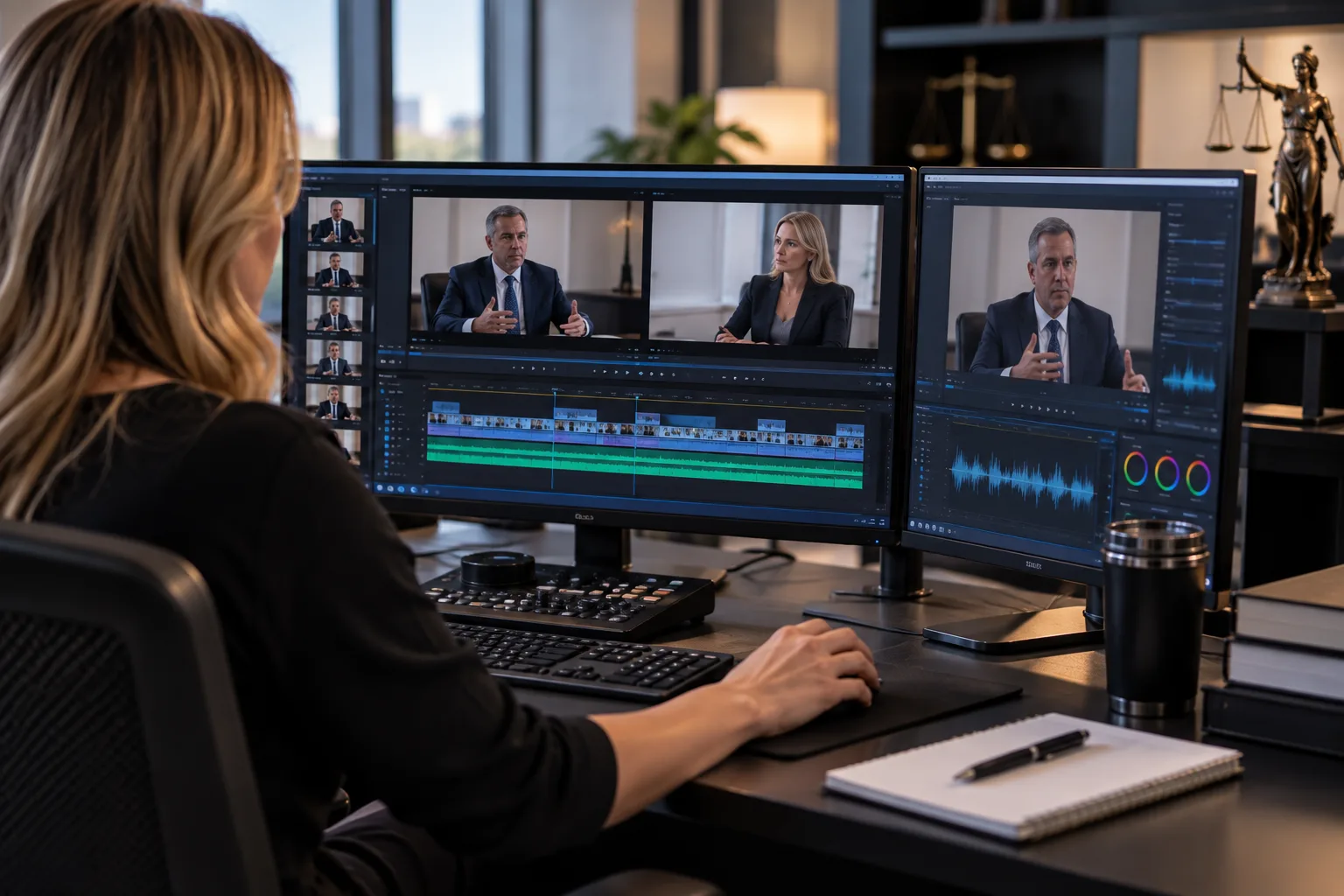
Agree on labels for each artifact: the official transcript, any audiovisual record specified in the notice, platform-generated files, exhibit files, interpreter channels, and technical logs. Preserve originals in their native form where appropriate and avoid editing a master file. Record the source, date and time received, handler, hash or other integrity information if the protocol calls for it, and every derivative created for review or use. The degree of formal chain-of-custody documentation will depend on the forum and purpose, but ambiguity is avoidable in every case.
4. Identity, oath, exhibits, and confidentiality
Identity and oath
Before testimony, establish the witness’s identity by a method acceptable to the officer and governing law. Do not assume a video image alone satisfies a jurisdiction’s remote-oath requirements. Rule 30(b)(5) places oath administration and opening statements with the officer unless the parties stipulate otherwise; Rule 28 addresses who may serve as an officer. Confirm in advance the officer’s authority at the relevant location, whether remote administration is permitted, and what identification or attestation the officer requests. Put confirmations that matter to the protocol on the record.
Exhibits: one item, one identity
Use a controlled exhibit process. Before the proceeding, decide whether exhibits will be premarked, exchanged in a secure repository, delivered by email at the moment of use, or introduced through a dedicated exhibit manager. Establish a naming convention that identifies the sponsoring party, sequence, and version; keep an index showing the file actually displayed; and confirm verbally when an item is marked and shown to the witness. When an exhibit includes sensitive material, follow the protective order and decide who receives it, through what channel, and when access ends.
Screen share is a display mechanism, not an exhibit protocol. It can reveal notifications, notes, an unintended window, or a different version. The person sharing should close unrelated materials, use the agreed file, and identify the document on the record. If a witness needs a paper or native-file view, say so and preserve the distinction. Production choices such as enlarging, redacting, or clipping media should be documented and reviewed against the governing order and evidentiary purpose.
Counsel-witness communications and platform access controls
Set the communications rule before examination begins: whether counsel and witness may communicate during breaks; whether chat is disabled or limited; and whether private messages must be preserved or disclosed. The substantive limits on attorney-witness communications are jurisdiction- and order-specific. A platform setting cannot decide that legal question. State the protocol on the record, and pause to seek direction when a disagreement arises.
For confidential material, use accounts and links controlled by the authorized team, least-privilege access, multi-factor authentication where available, and encrypted transfer or storage appropriate to the sensitivity of the data. Limit downloads and recording permissions if the selected service permits it; remove access after delivery; and document who receives the files. NIST’s Cybersecurity Framework 2.0 is a risk-management resource, not a deposition rule; use it to assign ownership for access controls, incident detection, response, and recovery.
5. Objections, interpretation, and access interruptions
Objections, interruptions, and interpretation need a deliberate rhythm. Counsel should announce an objection audibly, allow the reporter to take it, and avoid speaking over the witness. The examining lawyer should pause after questions and after an objection, especially where there is latency. If sound becomes unintelligible, a document cannot be seen, or a participant disconnects, stop the question-and-answer sequence. The officer and counsel can identify what was lost, whether an answer must be repeated, and where the record resumes.
For an interpreter, identify the interpreter and language or mode at the outset, plan whether the interpreter appears on the same platform or in person, and test audio paths before the oath. Speak in short segments and let the interpreter complete the interpretation. Do not assume that a family member or ad hoc participant is an acceptable interpreter merely because the platform makes it easy to add one. Requirements for qualification and appointment vary by forum; consult the court’s rules and any governing order.
Accessibility planning should begin with the participant, not a default technology feature. The Department of Justice explains that effective communication depends on the nature, length, complexity, and context of the communication and the individual’s usual method of communication. Its guidance lists, among other aids, qualified interpreters and real-time captioning for people who are deaf or hard of hearing. A tribunal or other entity covered by the ADA effective-communication rules should apply its accommodation process; litigants should promptly use that process and coordinate any requested access measure. The guidance describes duties of Title II and Title III covered entities, not a freestanding duty of every litigant.
6. Technology and security failure protocol
Redundancy is preparation, not a promise of uninterrupted service. Test the primary connection, camera, microphone, power, platform permissions, and exhibit process. Identify a backup dial-in or telephone number, an alternate connection, a spare audio path, local power options where feasible, and contact information for every essential role. Ask the officer and videographer what restart or media-segmentation procedure they use. Do not create a parallel workaround that changes the recording method or participant access without considering the notice, stipulation, and order.
Adopt a simple failure protocol: stop substantive examination; announce the problem; note the approximate time and affected participant; preserve the file already created; reconnect or move to the agreed backup; then state on the record how the interruption was resolved and whether testimony must be repeated. If a security incident, misdirected exhibit, or unauthorized participant is suspected, restrict access, preserve relevant information, notify the people required by the order or applicable policy, and seek court direction as appropriate. The exact response will depend on the facts and legal obligations.
7. Closeout and delivery verification
Close the matter with a deliverables checklist. Confirm the transcript process and correction procedure with the officer. Identify the final audiovisual or audio files, any synchronized or review copies, the complete marked-exhibit set and index, interpreter or accessibility materials if separately retained, and the secure delivery channel. Clarify which file is an original, which is a working copy, and whether any platform cloud copy will be retained or deleted under the agreed protocol.
Before distribution, inspect the package for completeness: file names match the index; exhibit numbers match the record; audio and video play through; no prohibited material or unredacted protected information is included; and access is limited to authorized recipients. Keep the notice, stipulation, orders, attendance list, technical incident notes, and delivery confirmation with the case materials. These are production recommendations. Authentication, admissibility, sealing, retention, and service obligations remain questions of the applicable rules, orders, and law.
Sources and further reading
- U.S. Courts, Current Rules of Practice and Procedure — official source for the current Federal Rules and pending rule materials.
- Federal Rules of Civil Procedure (U.S. Courts; current official text) — official source for Rules 28, 29, and 30, addressing deposition officers, stipulations, notice, recording, remote means, and oral examination.
- U.S. Department of Justice, ADA Effective Communication — guidance on effective communication and auxiliary aids and services.
- NIST Cybersecurity Framework — voluntary risk-management framework useful for organizing cybersecurity planning.